Beyond the Visual — Identifying Performance Issues Through Thermal Patterns
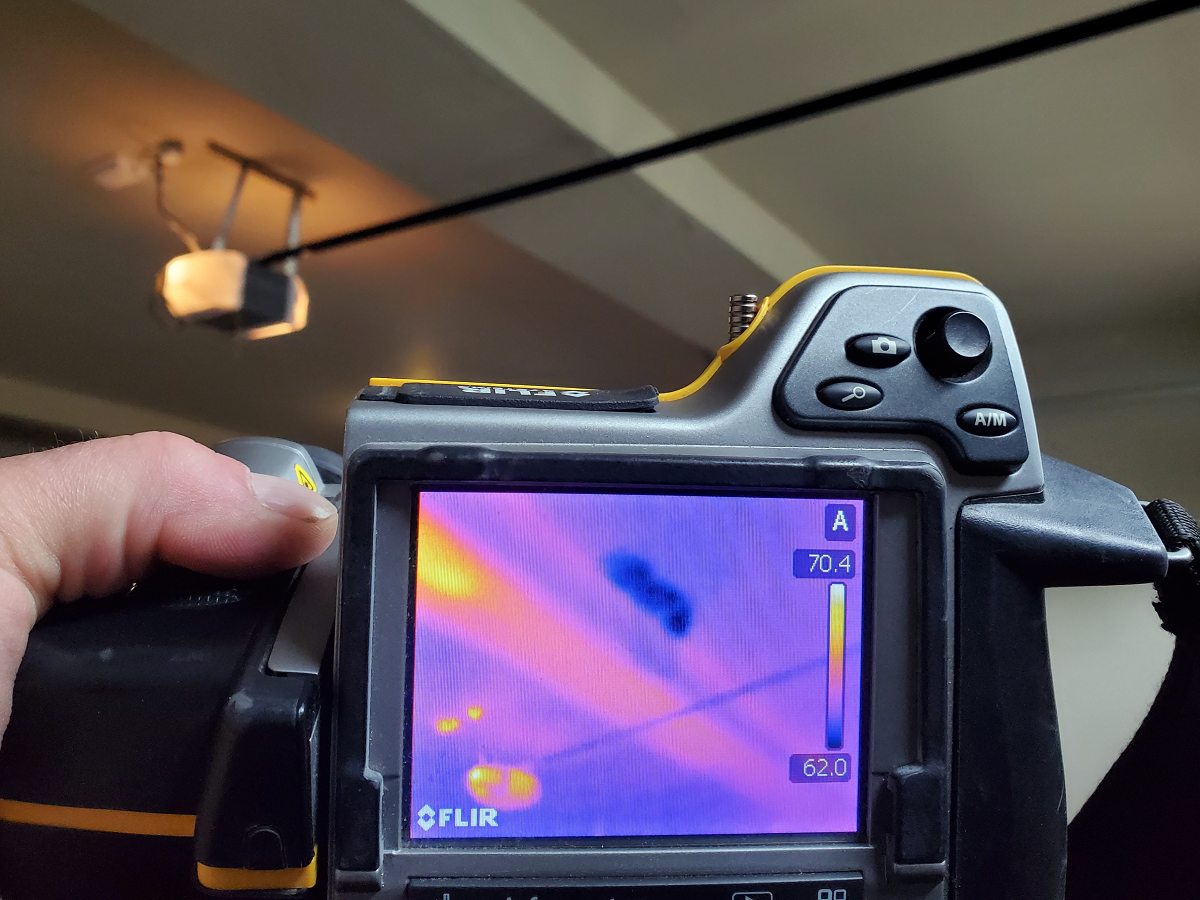
Thermal imaging has been part of our home inspection process since 2006. As an early adopter of infrared technology in the Pacific Northwest, we were among the first home inspectors in the Vancouver area to incorporate it into residential inspections.
Thermal imaging is used during a home inspection to help identify hidden building performance issues that may not be visible during a standard visual evaluation.
Infrared imaging highlights temperature patterns that may indicate building performance issues requiring closer evaluation.
What Infrared Thermal Imaging Reveals
Infrared (thermal) imaging visualizes surface temperature patterns. Any object above absolute zero emits infrared energy proportional to its temperature. A thermal camera detects the emitted energy and displays temperature differences as a visual image.
Common conditions revealed by thermal imaging include:
Moisture-Related Conditions
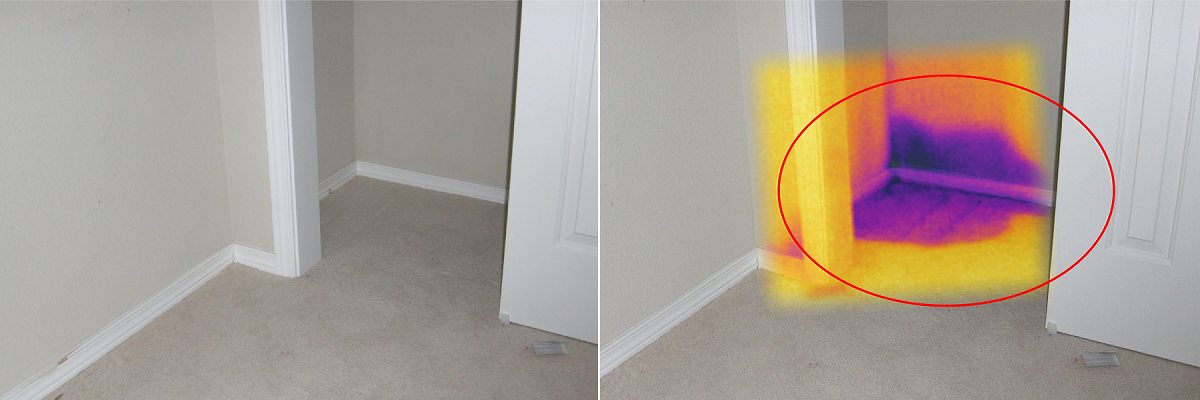
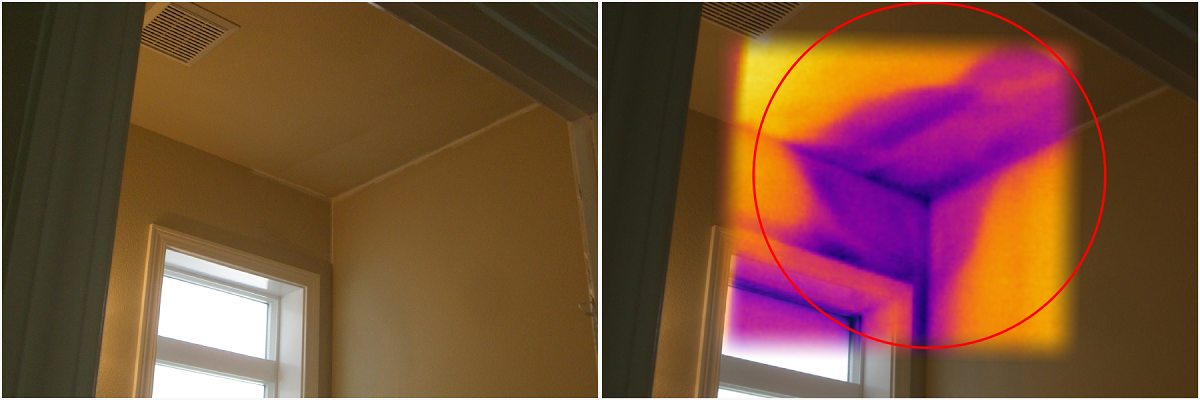
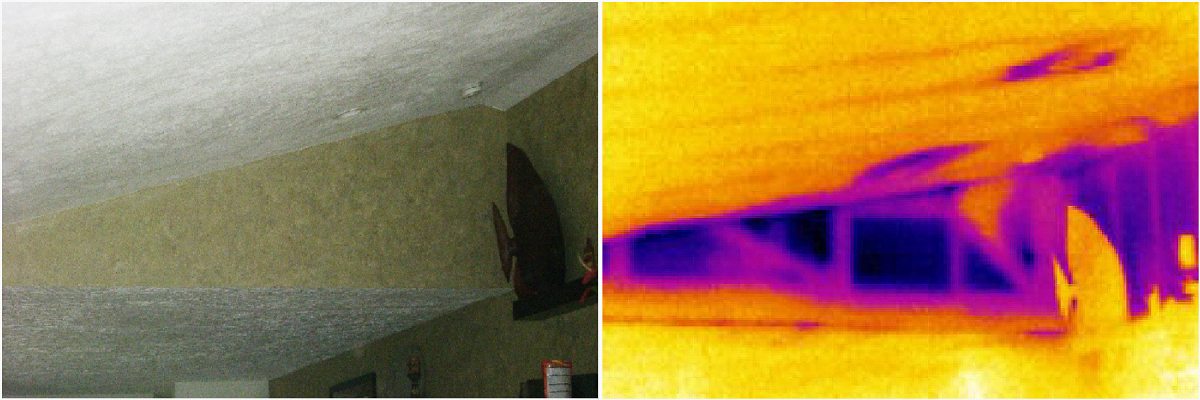
Thermal patterns consistent with active leakage may appear before visible indicators. Thermal imaging can help narrow the likely pathway and approximate the extent of impact.
Electrical Heat Anomalies
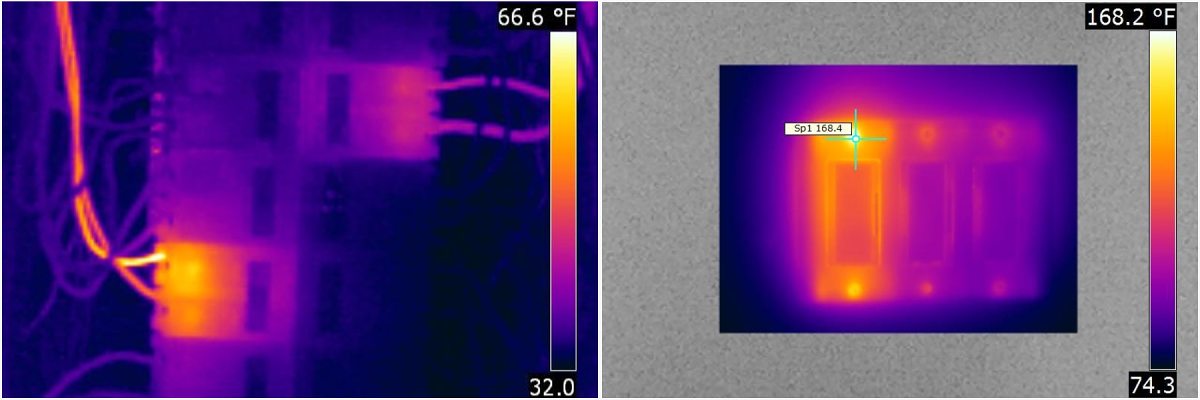
Overheating breakers, lugs, splices, or heavily loaded electrical components.
Insulation Performance
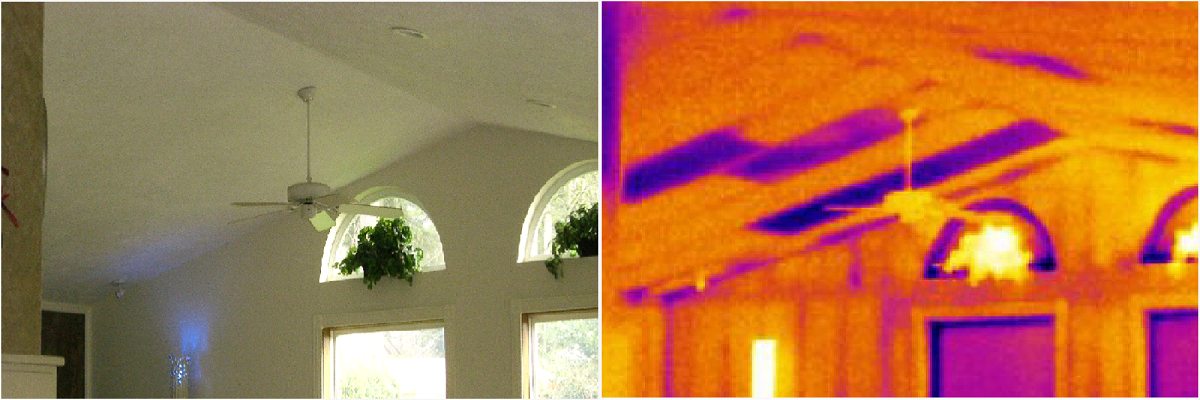
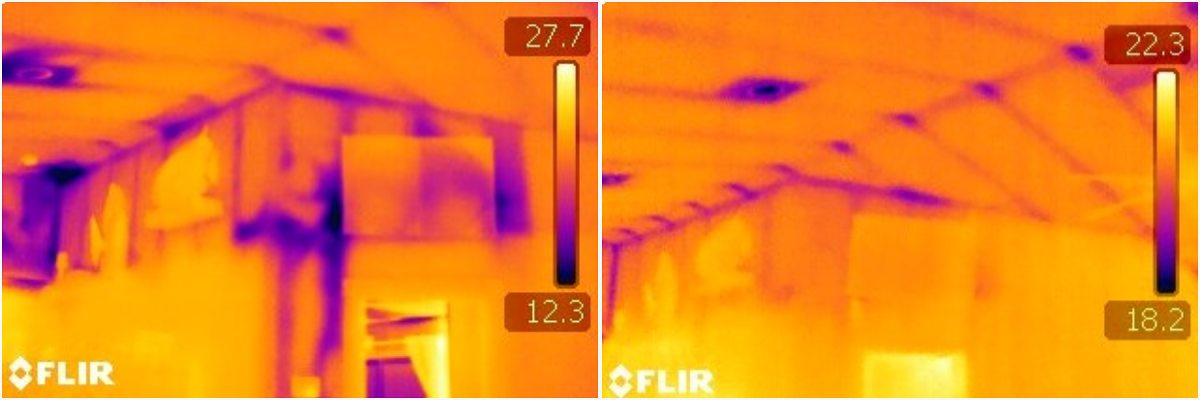
Missing, compressed, or displaced insulation, including thermal bypass and framing effects.
Air Leakage Detection
Draft pathways at penetrations, seams, and building envelope transitions.
Radiant Heat Distribution
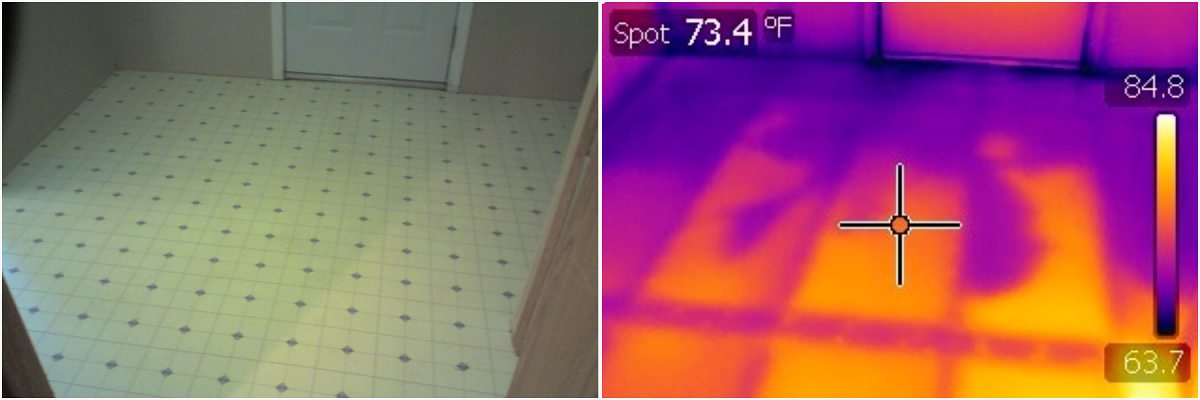
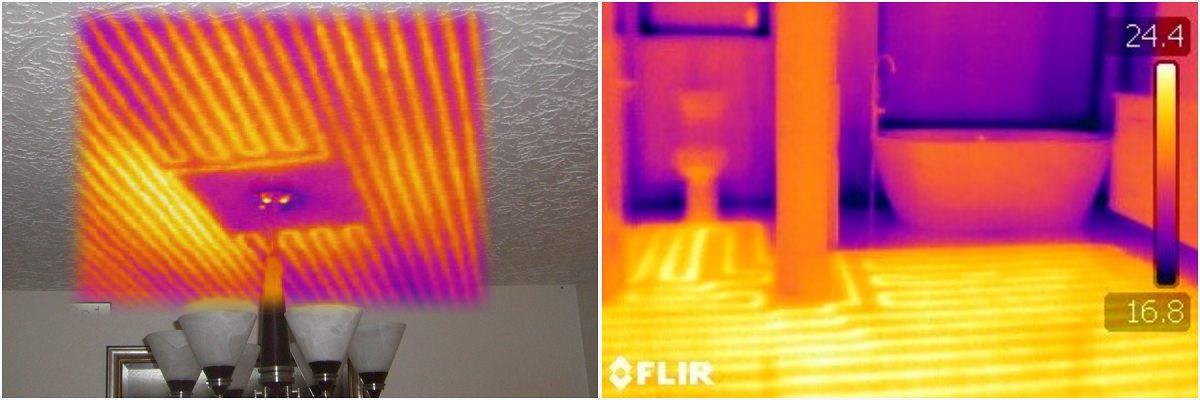
Thermal scans can help observe distribution patterns in hydronic or radiant heating systems.
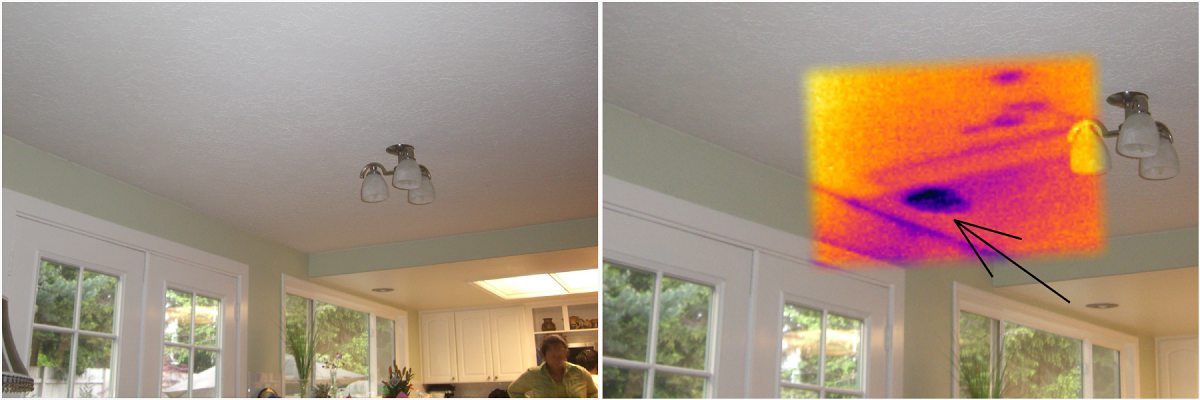
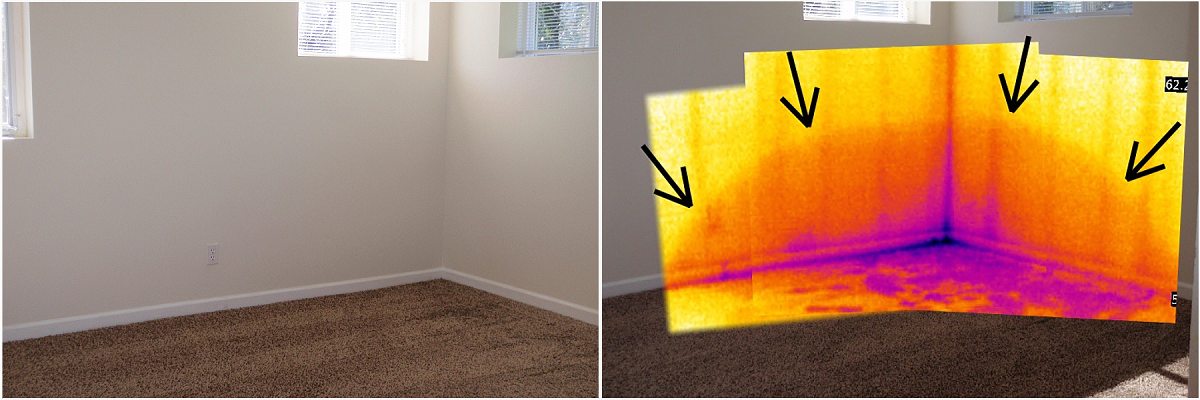
Interpreting Thermal Patterns
Thermal imaging shows apparent surface temperature, not what is inside a wall. It does not “see through” building materials.
In infrared thermography, the operator’s interpretation and verification process are as important as the technology itself. A thermal camera alone does not guarantee meaningful findings. Experience is what turns thermal patterns into useful diagnostic information.
Experienced Interpretation Helps:
Reduce False Positives
Distinguishing normal framing effects or air movement from patterns more consistent with moisture intrusion.
Recognize Thermal Bridges
Separating expected heat transfer at framing members from insulation voids, compression, or displacement.
Interpret Thermal Signatures
Identifying patterns consistent with electrical overheating, air leakage pathways, or moisture-related cooling and guiding appropriate verification.
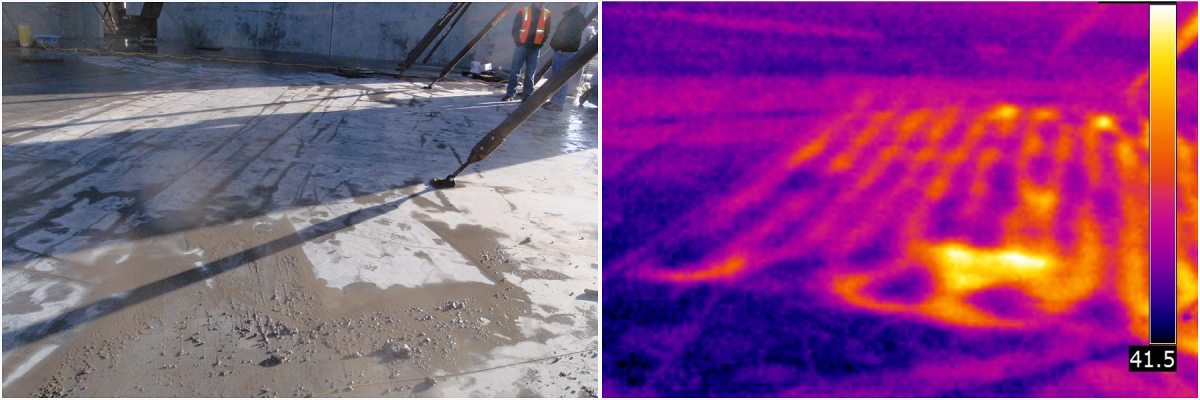
Pacific Northwest Conditions — Why Timing Matters
Thermal imaging relies on Delta T, the temperature difference between surfaces required to produce useful thermal contrast.
Environmental conditions strongly influence diagnostic value.
Thermal Contrast
A meaningful temperature differential—often around 15° to 20°F between interior and exterior—helps produce useful thermal patterns. On mild days, the interior temperature may be adjusted to improve contrast.
Solar Loading and Thermal Lag
Direct sunlight can heat exterior surfaces enough to mask thermal anomalies. Exterior scanning is often more meaningful early in the morning, in shaded conditions, or after sunset.
Rain and Surface Wetting
Active wetting can create evaporative cooling patterns that make moisture-related anomalies easier to detect shortly after a rain event. However, uniformly wet surfaces can mask temperature differences and reduce contrast.
Verification Protocol — Confirming Thermal Findings
Infrared imaging visualizes temperature patterns, not the underlying condition itself. Thermal anomalies are treated as indicators that require further evaluation and confirmation before conclusions are drawn.
Because thermal patterns can have more than one cause, anomalies must be interpreted carefully and verified when necessary.
A structured verification process helps distinguish normal building behavior from conditions more consistent with defects.
Thermal Discovery
A high-resolution scan identifies temperature anomalies, thermal signatures that deviate from expected patterns for the building assembly.
Physical Correlation
Anomalies are evaluated against the building’s construction, materials, and known thermal behaviors. This step separates assembly-related thermal bridging from conditions more consistent with defects.
Tool-Based Confirmation
Secondary instruments are used to verify the thermal anomaly and support the conclusion.
Verification methods may include:
- Moisture meter confirmation (non-invasive or pin-probe) to determine moisture content
- Hygrometer readings and dew-point evaluation when patterns suggest condensation risk versus bulk water intrusion
- Visual confirmation when additional access allows
Instrument Quality and Data Reliability
Having a thermal camera on site does not guarantee meaningful findings, interpretation and verification determine whether the data is useful.
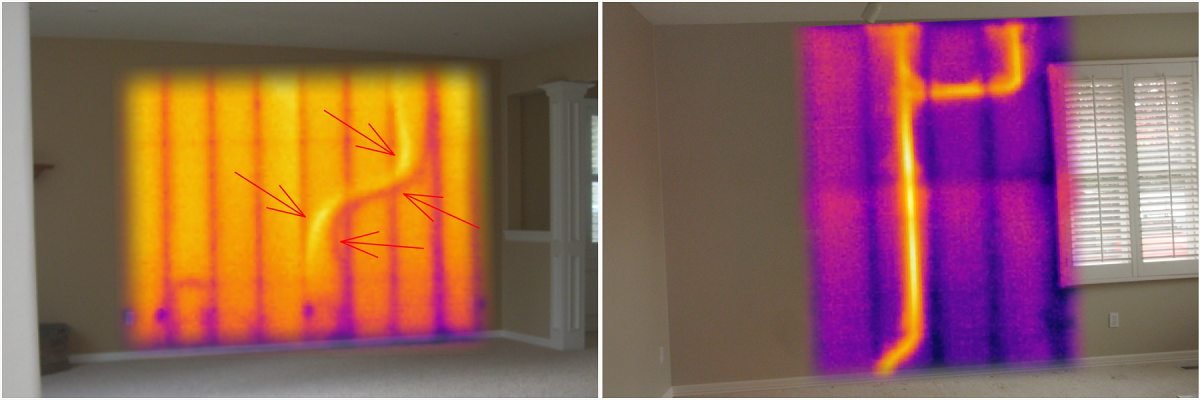
Infrared cameras vary widely in capability. Many entry-level or consumer units have limited thermal resolution and rely on image overlays or blending to improve interpretability.
Higher thermal resolution provides clearer temperature data and more reliable pattern recognition, reducing reliance on software overlays used to enhance lower-resolution images.
The objective is verified data, recognizing when thermal imaging provides meaningful diagnostic information and when environmental conditions limit results.
Targeted Infrared Diagnostics
Focused infrared scans may be used to investigate specific building performance concerns, including:
- Moisture intrusion evaluation (siding, roof, basement leaks)
- Insulation and air sealing evaluation
- Window and door air leakage evaluation
- Electrical heat anomaly screening
- Radiant floor or hydronic heat mapping
- Thermal bypass and concealed heat-loss evaluation
- Duct leakage and distribution loss screening
- Ceiling moisture and roof leak evaluation
- Post-repair thermal verification
Request an Infrared Thermal Consultation →
Thermal Imaging During a Home Inspection—FAQ
Will thermal imaging find every leak?
No. Results depend on timing and conditions. Leaks that are inactive, dry, or thermally equalized may not present a detectable signature.
Does thermal imaging work year-round in the Pacific Northwest?
Yes, but results vary with environmental conditions. It is most effective when there is a meaningful temperature difference, limited solar loading, and surfaces are not uniformly wet.
Will you scan the entire house?
Thermal imaging is typically applied strategically, focusing on higher-risk areas, representative surfaces, or client-specific concern locations. Coverage varies based on access, furnishings, weather, and available Delta T.
Does a “clean” scan mean there are no hidden problems?
Not necessarily. A clean scan means no significant thermal anomalies were observed under the conditions present. Concealed issues can exist without producing a detectable thermal signature.
Is thermal imaging included in the inspection?
Thermal imaging is used as a supplemental tool during the home inspection when conditions support meaningful results. It is not performed as a stand-alone exhaustive infrared diagnostic scan, which in best practice can take longer than the entire home inspection.