
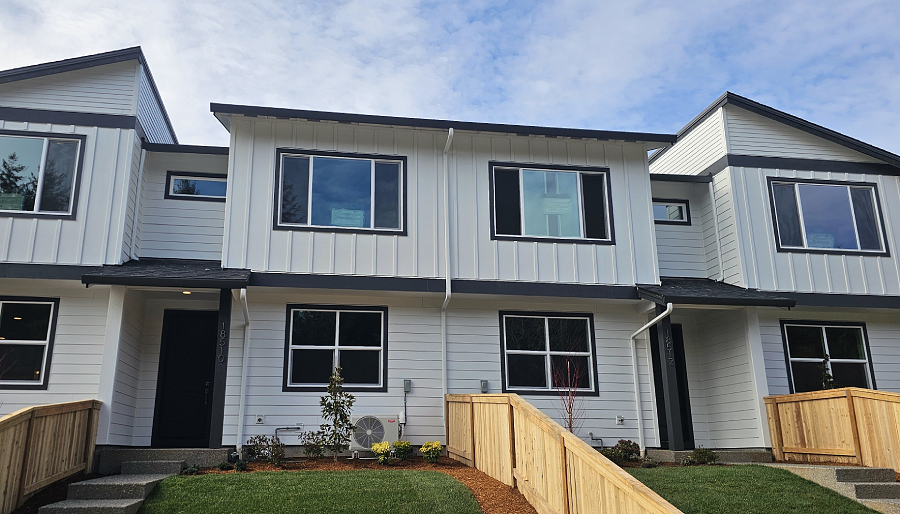
Navigating Shared Risk
During a purchase, the inspection is a primary step for understanding the condition of the unit and installed systems. With condos and townhouses, shared elements add another layer: HOA financial stability, maintenance planning, and how common-element issues are handled.
Every HOA Has Different Budgeting and Maintenance Strategies That Impact Owners
- Some have low monthly HOA fees and bill each owner a “special assessment” when it comes time to replace a major system, or unexpected repairs arise.
- Some have higher monthly HOA fees and budget for future system replacement.
- Some are a combination of both, or later find out due to inflated construction costs their budget was not aligned with reality, requiring a “special assessment” or monthly HOA fee increase, or both.
This is the same as your own personal budget and philosophy about maintenance. Do you budget for future major expenses, do you save for the unexpected, and do you prefer to perform routine preventative maintenance or not? Your personal philosophy may or may not align with the HOA you are joining.
Condo vs. Townhouse
- Townhouse: A townhouse may be fee-simple (often including exterior and land) or condominium-structured. When fee-simple, a townhouse is inspected the same as a detached home. Even with individual ownership, attached construction introduces shared risks; interconnected rooflines, party-wall assemblies, and fire separation details that receive special attention.
- Condo: A condo property can vary widely. They can be a single unit within a large high-rise, or I’ve encountered a 1920 house with a second smaller house built on the property, then both converted to a condo status structure, the HOA defined all maintenance to each owner.
Typically, with a condo, you own the interior portion of your unit and a shared (undivided) percentage interest in the common elements. The HOA governs and maintains those common elements per the association’s documents; exact boundaries and responsibilities depend on how the community is legally structured.
What Is Inspected, Unit vs. Common-Element Interface
This Depends on the Type of Condo
If a condo is located within a much larger structure, such as a high-rise or single unit within a multi-story building, the inspection is scaled back to the interior and the systems the owner is responsible for, at a reduced inspection fee. However, if the unit has access to adjacent common areas (such as an attic or crawlspace), those areas are included, and any issues identified can be further addressed by the HOA.
There are condo conversions (a converted apartment complex) which often lack individual unit fire separation in common areas. I’ve inspected a condo within a larger building where a new roof was installed and dryer ducts were left disconnected, an issue that affected multiple owners and would not have been obvious from interior-only observations.
Sometimes it’s not clear, or you have not received the HOA docs in time to review them before the inspection. This is where you have a choice: a full inspection or a condo interior-only inspection at a reduced fee.
When feasible, a full inspection (interior plus exterior/boundary points) provides the best context before you finalize responsibility through the HOA documents. When you review the HOA docs you can then verify what inspection findings are your direct responsibility or what needs to be forwarded to the HOA for correction.
A full inspection may highlight what exterior elements are nearing a replacement cycle, or how the HOA maintains these joint responsibilities. If I identify widespread siding failure or balcony rot, I am flagging a potential building-wide financial risk that your HOA dues may eventually have to cover.
What HOA Documents Should You Request and Review
- HOA resale certificate package (or equivalent)
- Reserve study (current + prior if available)
- Meeting minutes (12–24 months)
- Budget + most recent financials
- Maintenance/repair history for the building(s)
- Insurance summary (master policy + deductibles)
- Rules affecting maintenance or alterations (windows, flooring, ventilation, penetrations)
These documents often forecast special assessments, deferred maintenance, recurring leaks, and chronic disputes—things an inspection may not reveal.
Special Assessment Red Flags to Look For
- Widespread Siding Failure: Significant damage, rot, or failing siding across multiple units often indicates a systemic building envelope issue that a standard monthly budget may not cover.
- Roof Wear/Damage Patterns Across all Structures: Significant wear across multiple structures indicate the roof is nearing the end of its life cycle, regardless of whether your specific unit has a leak yet.
- Balcony and Deck Rot: Structural decay or failing waterproof membranes on balconies can be a precursor to expensive, building-wide reconstruction projects.
- Water Intrusion History: Staining patterns, repeated repairs or patching.
- Deferred Exterior Maintenance: Visible neglect of common areas, such as failing paint, roof debris, or clogged gutters, suggests the HOA may be underfunded or reactive rather than proactive with system replacements.
Because these physical indicators often correlate with financial instability, it is wise to cross-reference these findings with the HOA Reserve Study and Meeting Minutes to see if the association has a solid plan for the upcoming replacement cycles.
What You Will Receive
You’ll receive the same photo-forward report format and priority ratings outlined on the Home Inspection page.