
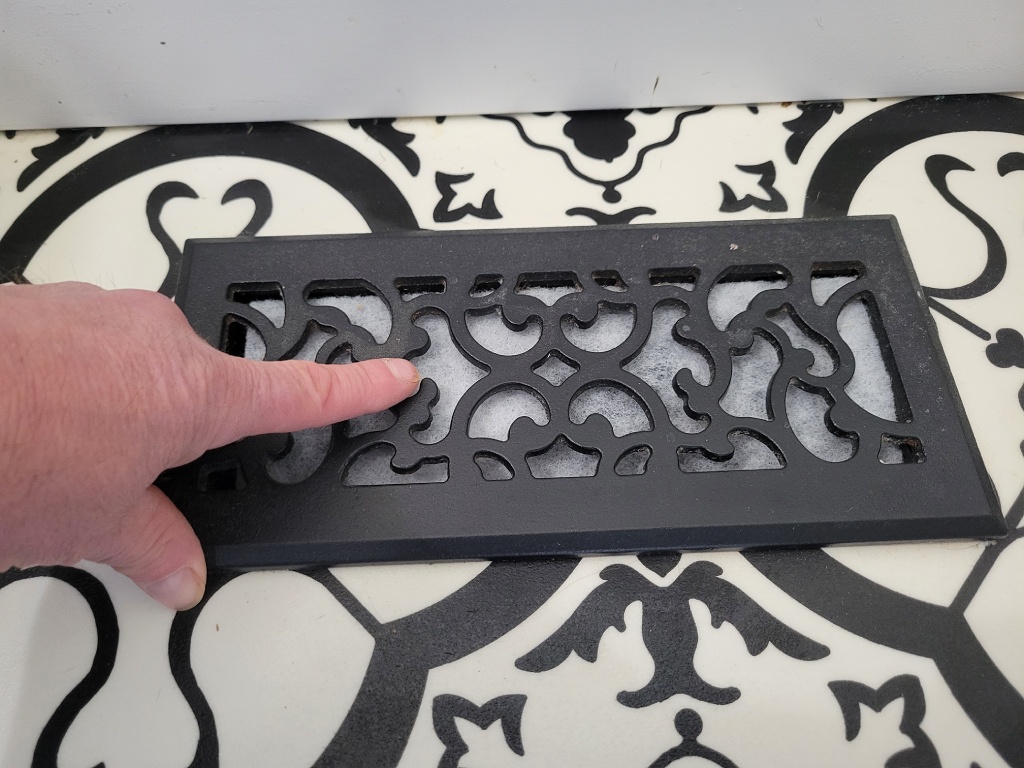
A solution looking for a problem—adding extra filters to supply or return HVAC registers.
Big box stores sell these by the thousands across Clark County. HVAC technicians rarely look for them during routine furnace or heat pump service. They appear to improve indoor air quality (IAQ); in reality, they increase operating cost and can shorten equipment life.
There are better ways to improve indoor air quality without stressing a major house system.
Why are extra filters a problem?
Reduced airflow is one of the primary causes of furnace, heat pump, and air conditioner failure.
Forced-air HVAC systems are engineered for a specific volume of airflow. Gas furnaces are designed to operate within a manufacturer-specified temperature rise (the temperature difference between the air going in and the air coming out). Air conditioners and heat pumps are commissioned using static pressure measurements to confirm airflow balance.
Adding restriction at either the supply or return increases static pressure and reduces airflow through the system.
What actually happens?
When airflow drops:
- Gas furnaces run hotter than designed, reducing furnace efficiency
- Refrigerant pressures move outside normal operating ranges
- ECM (Electronically Commutated Motor) blower motors work harder to compensate
Modern high-efficiency HVAC systems use ECM motors that automatically adjust ramping up their RPM (and power consumption) to maintain airflow. However, they have limits. Prolonged high static pressure increases wear and replacement cost.
Reduced airflow can lead to: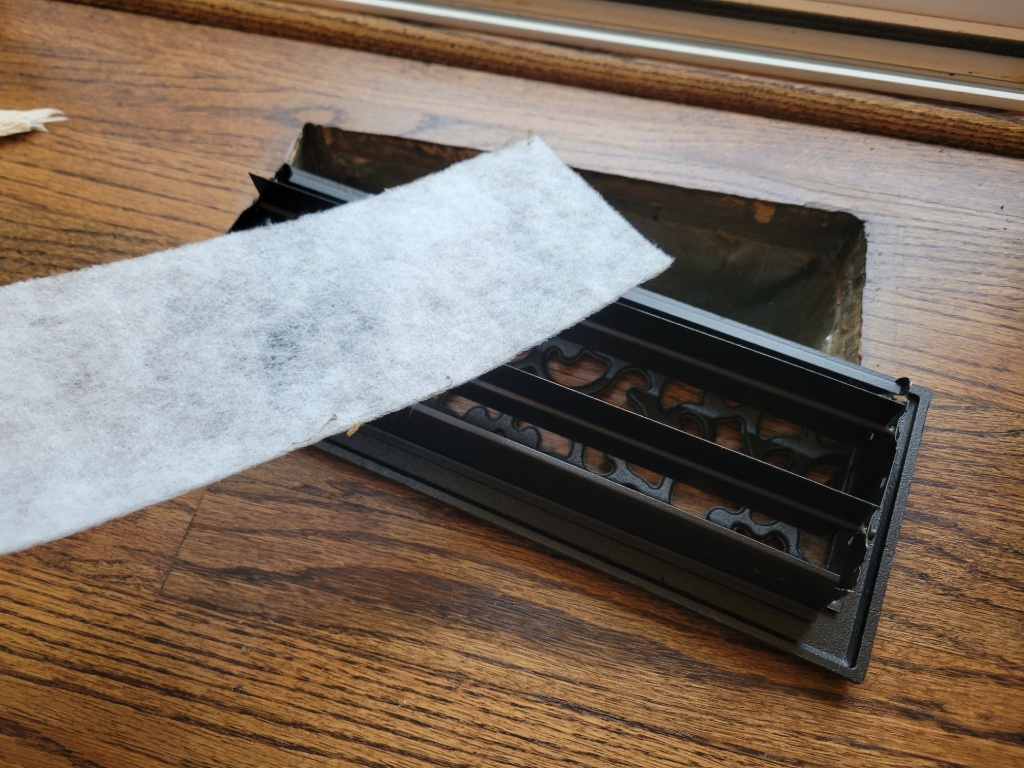
- Reduced heating and cooling efficiency
- Increased equipment runtime
- Evaporator coil icing in cooling mode
- Heat exchanger overheating in heating mode causing short cycling
- Premature blower motor failure
Airflow restriction increases operating cost and contributes to long-term HVAC system damage.
What about the dust at the registers?
Dark staining around supply grilles is commonly caused by air leakage at the vent boot; if it is coming from within the ducting, other deficiencies exist that should be addressed.
Prior to stricter air-sealing standards in the late 2000’s, duct boots in many Pacific Northwest homes were rarely sealed to surrounding drywall or subfloor. This allows unfiltered attic or crawlspace air to be drawn into the living space at the grille perimeter.
Adding filters at the register does not correct that problem. Air sealing does.
What should be done?
Use one properly sized, manufacturer-recommended HVAC filter at the central return unless the system was specifically designed for them.
If indoor air quality is the concern, evaluate primary filtration quality, duct condition and cleanliness, air sealing of the distribution system, and overall HVAC design before adding airflow restriction.
A related Article: High-MERV filters in older duct systems.