
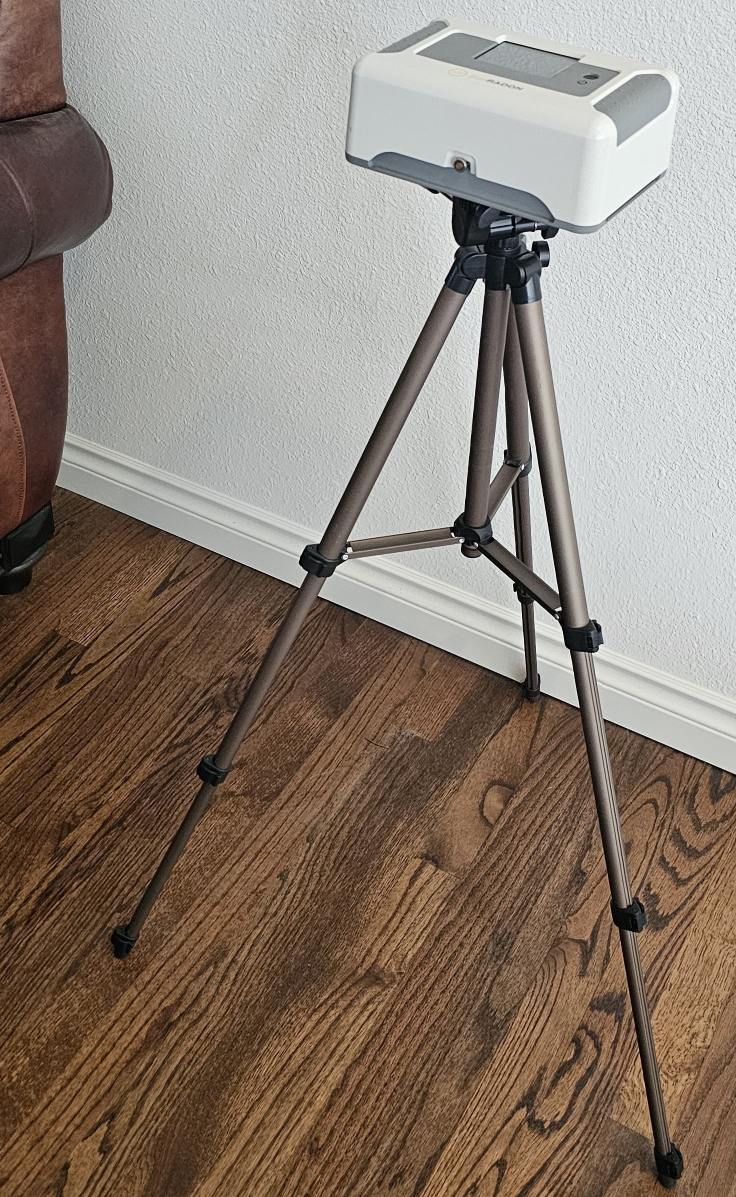
Radon Testing and Interpretation – Vancouver, WA
Why Radon Matters
Radon is a naturally occurring radioactive soil gas. When inhaled over time, its decay particles can lodge in the lungs, where cumulative exposure increases the risk of lung cancer.
Because houses operate at a lower air pressure than the surrounding soil, radon is drawn into the structure through ground-contact areas and building openings near grade.
Levels vary widely from house to house, even between neighboring homes. Testing is the only reliable way to understand conditions in a specific property.
Interpreting Radon Results During a Real-Estate Transaction
I’ve been testing homes for radon in the Vancouver area for over 20 years. One of the most common surprises for clients is discovering that radon results can look very different today than when the home was initially purchased.
Radon testing during a real-estate transaction is often treated as a pass or fail screening based on established action thresholds. That framework exists to support transparent decision-making and negotiation, not because the test levels are an absolute. A passing result does not mean radon is absent, and a failing result does not mean the home is unsafe to occupy.
Radon Action Levels and Guidance
The EPA recommends considering mitigation when radon levels fall between 2.0 and 4.0 pCi/L and recommending mitigation at 4.0 pCi/L or higher. This threshold is commonly used during real-estate transactions.
The World Health Organization recommends a lower reference level of about 2.7 pCi/L where achievable.
Radon risk increases with exposure over time, and levels naturally fluctuate. Long-term testing after occupancy provides the most reliable picture of typical conditions.
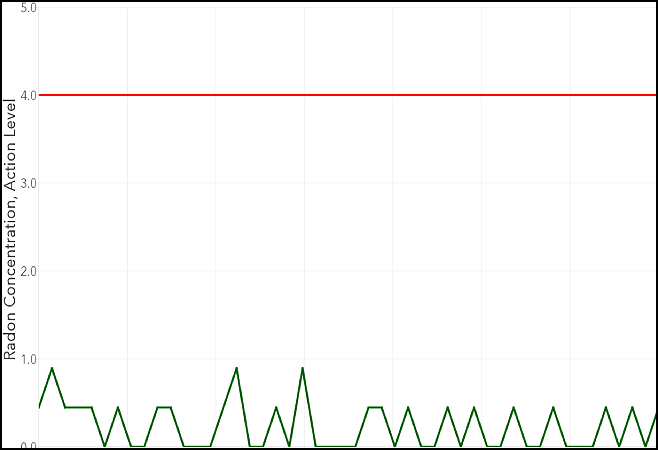
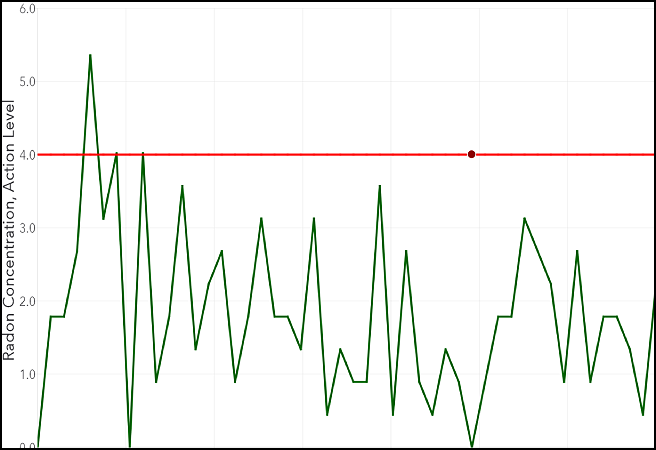
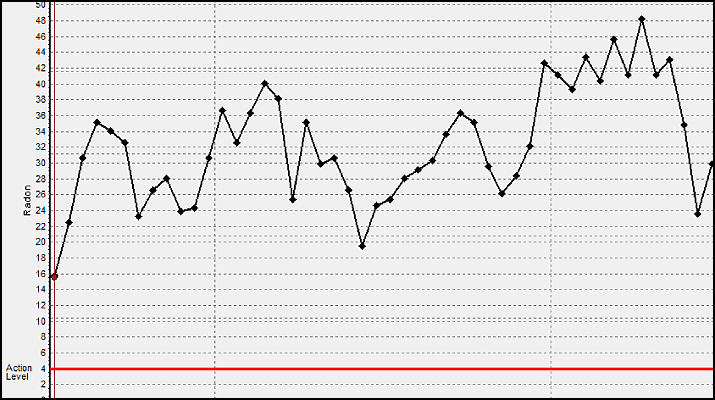
The examples below show two homes tested during the same period exhibiting different radon behavior.
Seasonal and Weather-Driven Variability
A short-term radon test performed during dry summer months does not always reflect what may occur during a cold, wet winter. That variability is not a testing flaw. It is the nature of radon itself. Radon levels fluctuate hour-to-hour, day-to-day, and season-to-season.
The simplest way to understand why is atmospheric pressure, which is constantly changing. In practice, I can often anticipate radon spikes simply by watching the weather forecast.
Storms, rain, and cold weather are often associated with lower atmospheric pressure, which can draw more radon from the soil into the home. Saturated soil around the exterior of a home can sometimes suppress radon movement, while the soil beneath the structure is often drier and more permeable.
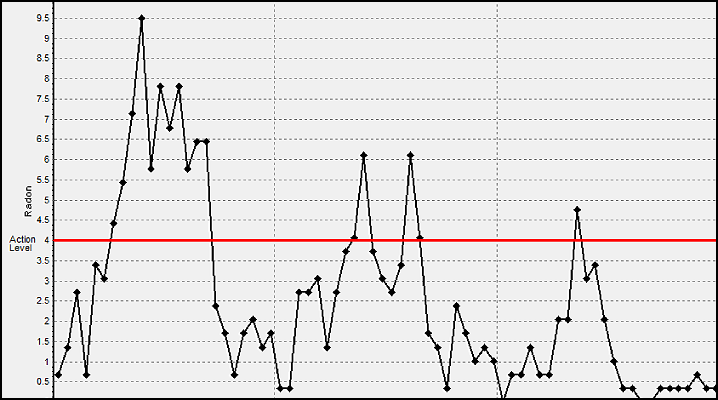
Below are results from the same home tested during different seasons. Summer levels were in the mid-2 pCi/L range, while winter results fluctuated into the 30 pCi/L range. In contrast, some homes exhibit little seasonal change at all.
Radon and Building Standards in the Pacific Northwest
As energy-efficiency standards have evolved and building envelopes have tightened, an unintended consequence has been reduced natural air exchange. In some cases, tighter construction can actually increase the stack effect, drawing more soil gas into the living space.
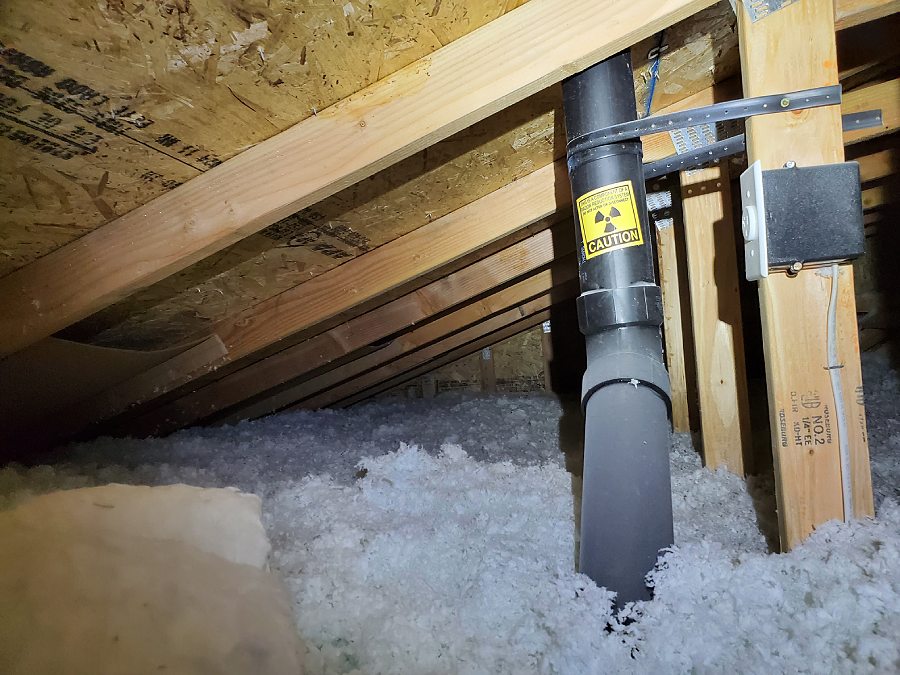
Since 2006, all new construction in Clark County has been required to include passive radon-reduction measures. These systems are passive, not mechanical, and do not require testing to confirm effectiveness. In practice, some perform well, and others do not. Testing is the only way to know.
What a Real-Estate Radon Test Can—and Cannot—Tell You
What the Test Can Tell You
- A snapshot of current conditions: A 48-hour test provides an accurate measurement of radon levels during that specific window under closed-house conditions.
- Immediate risk screening: It determines whether radon levels are elevated enough to warrant discussion, negotiation, or further planning before closing.
- Baseline information: Results establish a starting point for long-term air-quality monitoring and maintenance planning.
- System performance verification: If a mitigation system is already installed, the test confirms whether it is currently functioning as intended.
What the Test Cannot Tell You
- Year-round averages: A two-day test cannot predict radon behavior during other seasons, particularly a cold, wet Vancouver winter.
- Lifetime exposure: Radon risk is cumulative over decades. A short-term test is an initial screening, not a lifetime dose calculation.
- Future changes: Soil movement, seismic activity, renovations, or landscaping can alter radon entry pathways over time.
- Lifestyle effects: Closed-house testing does not reflect how occupants may actually live in the home, including window use or exhaust fan operation.
A short-term radon test is an essential due diligence tool, but it is only the beginning. For the most accurate risk assessment, long-term testing (90 days to one year) after occupancy provides the clearest picture of seasonal performance.
Why Vancouver, Washington, Is a Radon “Hot Spot”
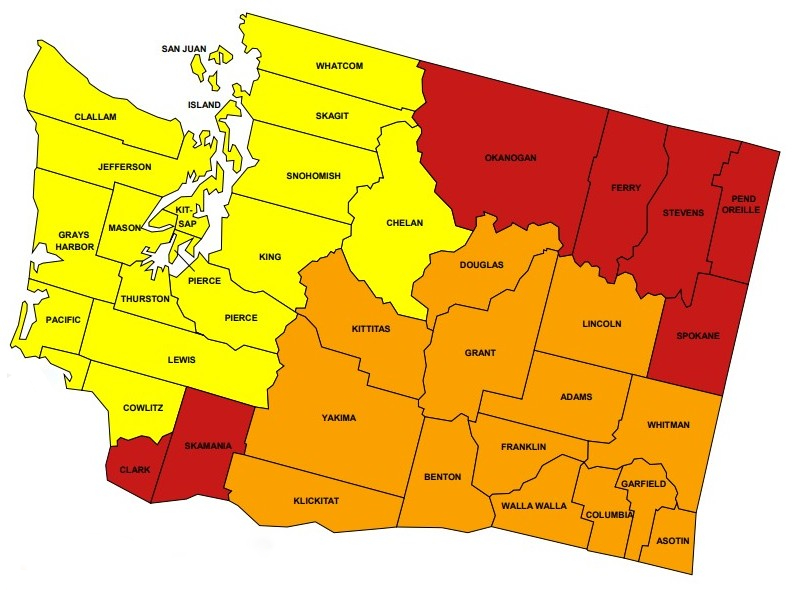 Much of the radon risk in the PNW is geological in origin.
The Legacy of the Missoula Floods
Thousands of years ago, massive floods carried debris from as far away as Montana and Canada into the Portland–Vancouver basin. This debris included granite boulders and gravels naturally rich in uranium. As floodwaters slowed, these materials were deposited into the soil beneath where we now build homes. As uranium decays, it becomes radium and eventually radon gas.
Highly Permeable Soils
Geology is not just about what is in the ground, but also about how easily gas can move through it. Much of Clark County sits on well-drained gravel and sand deposits left by those floods. Unlike dense clay soils that can restrict gas movement, these porous soils allow radon to migrate easily toward the low-pressure environment of a heated home.
Regional Geologic Activity
The Pacific Northwest is geologically active. The same forces that formed the Cascade Range also created fractures and fissures in deeper bedrock. These features act as pathways for radon gas to move upward. Subsurface granite formations throughout the region further contribute to elevated background radon levels.
Should I Buy a Home with a Radon Mitigation System
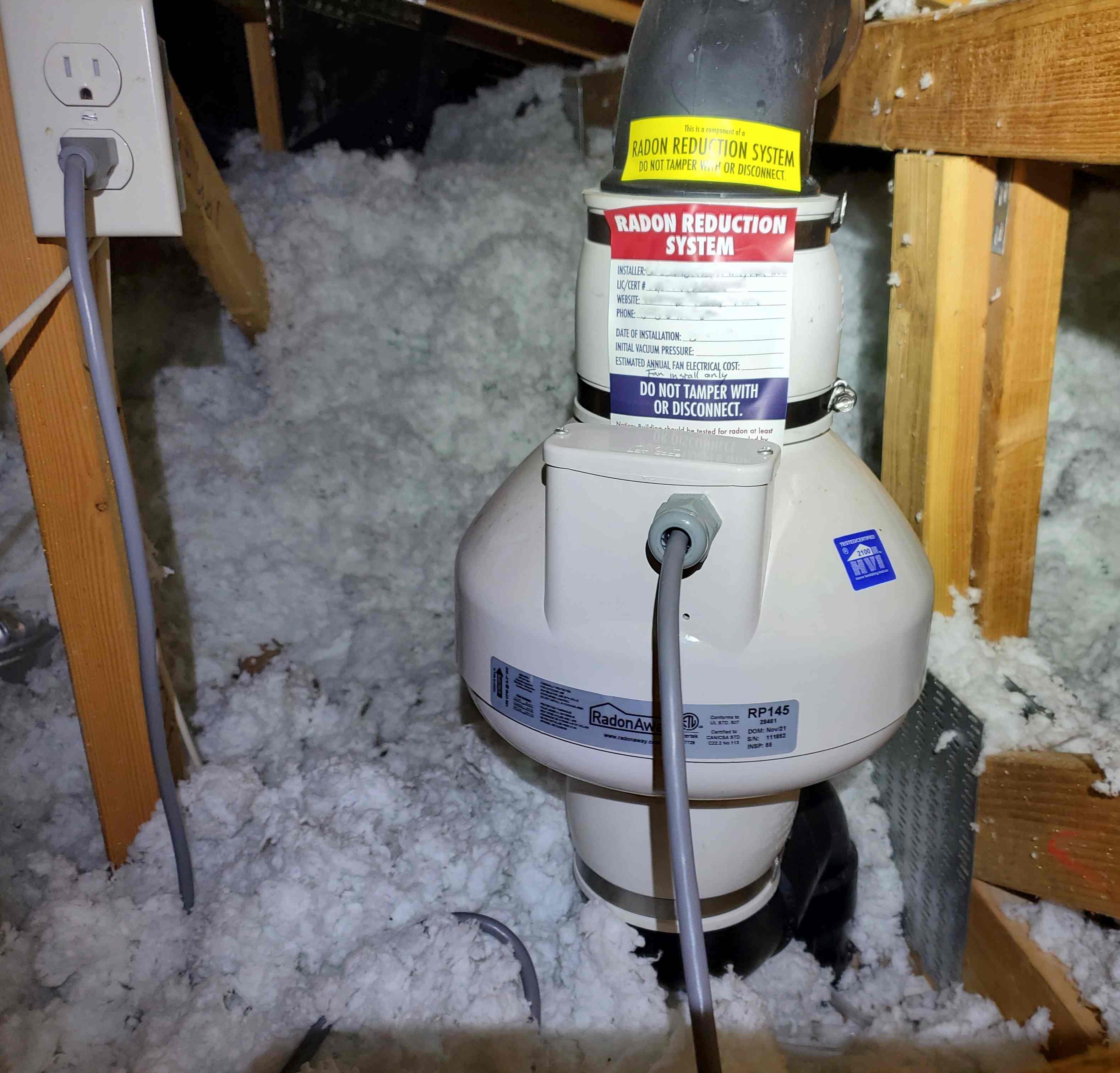
This question was common years ago, but it arises less often today. The presence of a mitigation system indicates that a previous owner identified and addressed radon risk. Conversely, the absence of a system does not mean mitigation is unnecessary. The system itself is best viewed as a regular risk-management feature—not a defect.
How Often Should Radon Be Tested
- During real estate transactions: Standard 48-hour screening.
- After mitigation: Verification testing to confirm system performance.
- Ongoing ownership: Every two years, consistent with EPA guidance, or after major renovations.
How Is Radon Tested
Closed-House Test Conditions
Radon testing during a real-estate transaction is performed under “closed-house conditions.” Windows remain closed and exterior doors are used only for normal entry and exit. These conditions stabilize indoor air pressure and help produce a reliable measurement during the 48-hour testing period.
Radon testing options range from inexpensive charcoal kits to advanced electronic monitoring.
Charcoal canisters are passive “blind” tests. They provide a single averaged result after laboratory analysis and offer no insight into hourly fluctuations or test conditions.
Professional Continuous Radon Monitors are laboratory-calibrated electronic radon detectors. They record levels hourly in a clear graphical format. Beyond producing an average result, this data reveals how radon behaves during the test period. Significant fluctuations can indicate sensitivity to changing atmospheric conditions and may suggest wider seasonal variation. These patterns provide valuable context when interpreting results rather than relying on a single number alone. These instruments also include motion sensors to detect tampering, helping ensure test integrity.
We only use professional-grade continuous radon monitors manufactured by Sun Nuclear.